
boiler
by Class 2A - Liceo Volta, Turin, Italy (G1)Abstract:
Il fenomeno del body shaming rappresenta una delle forme di violenza verbale contemporanea più insidiose , in quanto capace di trasformare termini neutri o storici in armi di stigmatizzazione sociale. Questo processo di risignificazione negativa colpisce duramente la percezione del corpo, specialmente quello femminile, dove il linguaggio metaforico viene usato per rinforzare stereotipi estetici restrittivi.
Un esempio lampante è l'uso del termine boiler. Originariamente derivato dal verbo inglese “to boil" per indicare un comune scaldabagno, questa parola ha subito una degradazione del significato. Nel gergo del pregiudizio estetico, 'boiler' è diventato un insulto specifico per descrivere corpi femminili percepiti come eccessivamente voluminosi o sgraziati. La metafora riduce l'essere umano a un elettrodomestico ingombrante, privando la persona della sua dignità e oggettivandola attraverso un paragone puramente meccanico.
Parallelamente, la figura mitologica del Golem subisce una distorsione simile. Se nel folklore ebraico il Golem è un gigante d'argilla creato per proteggere la comunità, nel linguaggio dell'offesa viene evocato per descrivere fisicità considerate massicce, sproporzionate o prive di armonia. In questo caso, il richiamo al mito serve a deumanizzare: il corpo non è più carne e ossa, ma un ammasso inerte di materia informe, pesante e mostruoso rispetto ai canoni di bellezza dominanti.
Questi slittamenti di significato dimostrano la potenza manipolatoria del linguaggio. Termini nati in ambiti tecnici o spirituali vengono strappati al loro contesto originale per alimentare il giudizio sociale, trasformando la descrizione fisica in una forma di marginalizzazione che punisce chiunque non aderisca a standard di magrezza e proporzione predefiniti.
The phenomenon of body shaming is a modern form of verbal violence that turns neutral or historical words into tools for social stigma. This process changes the meaning of language to target the human body, especially the female body, and reinforces narrow beauty standards.
A clear example is the word boiler. Originally, this term comes from the verb "to boil" and refers to a common water heater. However, in the language of body shaming, it has taken on a negative meaning. It is now used as a specific insult to describe women’s bodies perceived as excessively large or bulky. This metaphor reduces a person to a heavy household appliance, stripping away their dignity and treating them like a machine.
Similarly, the mythological figure of the Golem has undergone a similar change. In Jewish folklore, the Golem is a giant made of clay created to protect the community. Today, this term is often used as an insult to describe bodies seen as massive, out of proportion, or lacking grace. This comparison is a form of dehumanization: the body is no longer seen as flesh and blood, but as a heavy, monstrous mass of shapeless matter.
These shifts in meaning show how language can be manipulated. Terms from technical or spiritual contexts are taken out of their original use to fuel social judgment and marginalize anyone who does not fit into traditional standards of thinness and proportion.
Etymology:
The word boiler comes from the english verb "to boil" with the added suffix -er indicating the device. Over time this word has become an insult towards women that do not conform to the canons of modern beauty set by cultural and social standards as well as by big model agencies. The word golem has very ancient roots. The word was first used by Hebrews in their bible with the meaning of “incomplete matter”. During the Middle Ages the meaning of the word golem evolved and became an anthropomorphic figure that is huge, heavy and made of earth, mud, or stone. Today, with the boom of the video-games "Golem", it has become to indicate a massive figure that has high resistance, good health, and it is slow and hard to take down.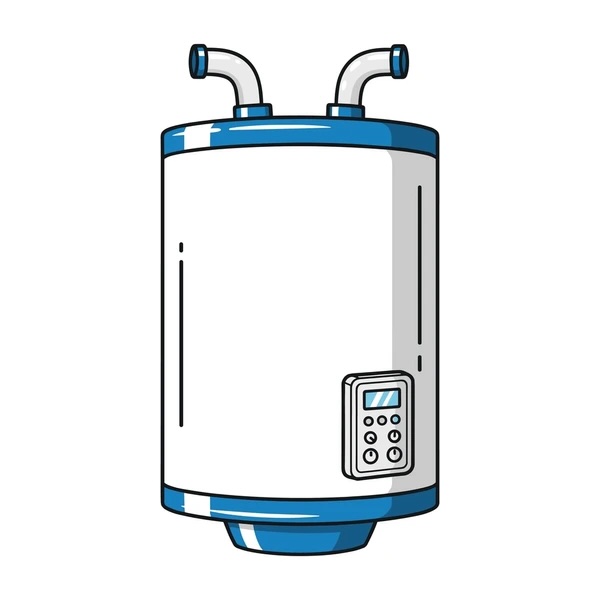

The word golem has very ancient roots. The word was first used by Hebrews in their bible with the meaning of “incomplete matter”. During the Middle Ages the meaning of the word golem evolved and became an anthropomorphic figure that is huge, heavy and made of earth. Today, with the boom of the video-game "Golem", it has become to indicate a big character that has high resistance, good health, it is slow and hard to take down.
Cultural specificity:
In Italy, the word boiler is a way to insult women that aren’t skinny.
We came across this word while scrolling on social media through a challenge called “Boiler Cup”, a contest in which guys get points by kissing a curvy or overweight girl - the bigger the girl, the more points the boys get. There are many videos on social media about this challenge. The social media that got more engaged with it is Tik-Tok. |  the terrible bodyshaming Tik Tok challenge. Bullism. discrimination, fatphobia, and misogyny: that's why the Boiler Summer Cup, which has become viral, must be condemned (screenshot from Tik Tok) |
.png) (screenshot from TikTok) | In the social media, besides the word boiler another common insult is the word golem, similarly used to affront chubby and fat women. |
At the end, body shaming is the center point of everything in a society where only the bodies that follow the normative beauty standards get appreciated.
Both the words boiler and golem are thus used in a negative way by teenagers and, in general, young people as a way to insult a girl during an argument or a peer discussion.
Problematization:
As seen, the word boiler itself is not an insult but it has acquired a totally different meaning nowadays. All of this happened because of a social media challenge called «The Boiler Summer Cup» that had a great success since its appearance on TikTok in May 2022, but that quickly became an international trend.
«The Boiler Summer Cup» is a contest that was created on social media by young men in the US who wanted to bodyshame girls without them noticing and then posting a video on social media to update the audience of how many points they had scored - points which are assigned according to how big was the girl.
.jpg)
Examples of comments from TikTok videos are: «She is 8 points»; «I would win really quick»; «Boiler cup final boss»; «Who kisses will win the cup». Indeed, a main rule of the contest is that the kiss has to be recorded and posted on social media to be valid.
The phenomenon spread quickly, and people (in particular young men) began using the comment section of the videos posting remarks that had nothing to do with the challenge but that were only to value the points of a girl or make fun of her through the challenge.
Many girls and women have been finding these comments under their videos, that propagate an extremely discriminating wave of hate against female bodies that do not conform to normative beauty standards.
Communication strategies:
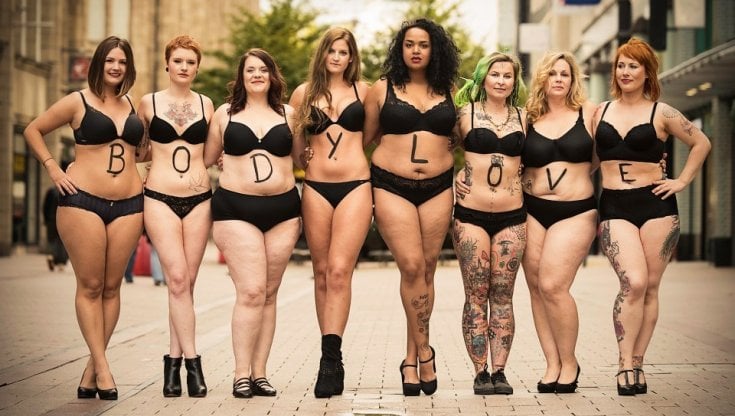
The videos that have been published since 2022 have raised fierce complaints, inquiries, and investigations, denouncing the contest and countering it with articles and videos that reinforce messages of body positivity.
An article in the Italian newspaper Il Corriere (https://www.corriere.it/sette/attualita/23_gennaio_13/conquistare-over-size-l-infame-challenge-tik-tok-che-raggira-adolescenti-cb643a20-8f6f-11ed-ae40-41a711fcbe95.shtml) reports an interview to the 23 year-old body-positive and fat-acceptance activist Dalila Bagnuli who managed to stop the contest and has become a point of reference for many girls. However, she continues bitterly, the contest has reborn under different names.
The article ends with the testimony of sixteen-year-old Alessia that evidences the malice of the contest. She says that when she saw a video scoffing at a girl, she thought, 'oh, poor her' and she would have hugged the girl. Only after a while, she realized that the girl portrayed in the video was her.
Indeed, another malignant aspect of the contest is that girls are the unaware protagonists of the contest, and realize that only when they see themselves in the videos.
 | Also another Italian newspaper La Repubblica fiercely stigmatized the contest, as well as several TV inquires and programs, as for example documentaries on body shaming (e.g., Le Iene or Fanpage) that have analyzed the "Boiler Summer Cup" phenomenon, interviewing the victims. |
Subversion:
Social Media
Recently, many female influencers have been getting attention for praising and advising body positivity.
The main ones are:
- Spencer Barbosa (https://www.instagram.com/spencer.barbosa/), famous for promoting and building self-confidence
- Bethany Cook (https://www.instagram.com/bethanycook_/), known for how she tries to normalize the connection between curvier bodies and fashion
- Clara Dao (https://www.instagram.com/clara_dao/) whose goal, especially in her old videos, was to make every girl and woman feel comfortable in their own skin
- Katherine rae (https://www.instagram.com/thekatherinerae/) who makes videos about where to find cute and stylish plus size clothes.
Furthermore, some body positivity activists (as content creator and activist Caterina Guerra https://www.instagram.com/caterina.guerra99/) use the term boiler in their educational contents to explain how fatness is a physical characteristic and not a moral failing, trying to 'normalize' the term to the point of making it harmless by promoting the acceptance of all bodies and challenging imposed beauty standards.
The Arts
Fernando Botero, a Colombian artist, revolutionized art with his signature 'boterism'— an aesthetic celebrating exaggerated volume in human forms.
Botero painted and sculpted voluminous women as symbols of vitality, sensuality, and power. Botero's canons derived from his passion for his homeland and was inspired by the history of Italian Renaissance art. Botero's paintings combine solid, full and monumental forms. When some critics asked him why he painted overweight women he simply answered: “I do not paint overweight women. I only explore the volume”. From his point of view, the soft, full forms are more intense than the lean ones, and the roundness represents sensuality and the exaltation of life.
| .jpeg) (1997) |
.png) | "La Fornarina" reinterpret Renaissance beauties with swelling curves. |
The contemporary English artist Jenny Saville refers to the history of art and the oil painting technique to depict monumental, heavy, nude female figures which directly challenge the traditional, idealized, and patriarchal representations and the notion of beauty of the female body. | .png) (1992) https://www.designartbeauty.com/jenny-saville-monumentalmente-donna/ |
Films/TV series
Cyberbullying is addressed in documentaries and TV series, as for example the Italian TV series Skam Italia and Prisma that explores young people's relationship with body image and the violence of online comments.
An example of a TV series is also «Insatiable» in which a young, fat, and unkempted girl develops an ED (eating disorder) and as soon as she becomes skinnier people start talking to her and she understands that what matters in this world is the just the outer appearance. | .png) (Netflix, 2018-2020) |
Music
In music, especially in Italian Trap and Drill, the language is often crude. However, the strongest response against bodyshaming comes from the world of Pop/Indie.
For example, in her songs and interviews, the Italian artist BigMama takes the insults she receives about her weight and transforms them into an anthem of power and talent, rejecting the label of victim.
Here are some of her words on her body from interviews and monologues: ""My body led me to chemotherapy at 20. My body has given me so much and taken so much away"; "I love being too much; "If you don't like my body, don't be like me your whole life"; "I grew up alone: a book to say thank you to my body."
.png) (2024), Rizzoli | "Cento occhi" [One Hundred Eyes] is a song written by BigMama inspired from the experience of being bullied for her physical appearance, and transforming the gaze of others into self-awareness that leads to redemption. With the same title and themes, in 2024 she published a book where she speaks about her life experiences mixing elements of poetry and self-reflections.
|
"La rabbia non ti basta" [Anger is not enough for you] was written by BigMama for Sanremo 2024. The song speaks about the need to overcome pain and internal anger to convert them into strength and link it to the need of self-acceptance and self-protection, especially when one has been a victim of bullying. |
Advertising
Also some companies have embraced the body positivity message and promote it in their advertising.
Dove has been one of the first companies to support body confidence and positive self-image by launching the 'Real Beauty Campaign' in 2004.
.png)
The video "Beauty Bias" was created by the company Dove. It portrays real testimonials of diverse women in everyday scenarios: job interviews, where candidates are prejudged on appearance before speaking, promotions denied for not matching corporate 'image' ideals, and self-doubt rooted in societal body standards. The video explores the concept of weight bias. It shows how society creates strict beauty standards that often favor thin people. When we follow these standards too closely, we develop a bias, an unfair prejudice against people who don't fit that specific image. The main message is that beauty standards based on weight are harmful. They hurt people's self-esteem and make them feel judged for their appearance rather than for their personality. Dove wants to promote body positivity, which means accepting and celebrating all body types. By recognizing our biases, we can learn to treat everyone with respect and see beauty in diversity. |
In the first part of the video "AI & beauty standards" we can see a woman asking AI to generate photos of the most beautiful woman in the word, the perfect body for a woman and the perfect skin for a woman. At least once in her life, every woman dreams to become different, to become like the supermodel that we see on tv or in the social media. This happens because women follow unrealistic standards of beauty instead of trying to feel beautiful the way they are. In the second part of the video the woman asks AI to generate different images of beauty, but this time the point of view is different: the images are more realistic and they portay different types of beauty, where every woman has some imperfection but it is this imperfection to make her so special. Dove created this advertising to protect the young generation from the unrealistic inspiration generated by AI, which reproduces normative and biased standard of beauty. |
Last but not least. Tracing back the history of the Body Positivity Movement, an article on BBC Bitesize concludes quoting the Fat Manifesto and saying that if body positivity does not include the fat people and Black people who made Body Positivity possible - as well as other marginalized bodies - it’s not Body Positivity at all (https://www.bbc.co.uk/bitesize/articles/z2w7dp3).
Discussion:
Here are some questions to reflect on the words boiler and golem.
- Why do you think that weight, out of all the female traits, was chosen as a way to discriminate girls and women?
- What kind of impact do you think it has, especially on younger girls?
- Why do you think the 'Boiler Cup' challenge became so popular?
- How did you feel while reading this entry?
- Do you feel like that the use of such words are normalised in our society?
References/Further Readings:
In Italian:
- Bagnuli, D. (2023). ANTI manuale della bellezza [ANTI-handbook of beauty]. Sonda.
- BigMama (2024). Cento Occhi [One Hundred Eyes]. Rizzoli.
- Ciabatti, T. (2013). Conquistare una over size: l’infame ‘challenge’ di Tik tok che raggira le adolescenti [Wooing an oversize girl: Tik Tok’s hideous challenge that circumvents the teenagers]. Il Corriere, 23 January, 2013.
- Liso, O. (2022) Boiler summer cup: una sfida all'intelligenza [Boiler Summer Cup: a challenge to intelligence], Repubblica, 27 May, 2022.
In English there are many books of what has now become a genre, ‘the Fat Studies’. These volumes offer feminist perspectives, insights, inspiration, and concrete tools for enhancing body positivity and fighting against discriminations regarding beauty body standards. Here are the ones that we suggest:
- Cooper, C. (2021). Fat Activism: A Radical Social Movement. 2nd ed. Intellect Ldt.
- Taylor, S. R. (2018). The Body is not an Apology: the Power of Radical Self-Love. Berrett-Koehler Publishers.
- Tonic, G. (2025). Greedy Guts. Notes from an Insatiable Woman. Coronet..
- Wann, M. (1998). Fat! So?: Because You Don't Have to Apologize for Your Size. Clarkson Potter/Ten Speed.
How to cite this entry:
Class 2A - Liceo Volta, Turin, Italy (G1). (2026). Boiler. In Other Words. A Contextualized Dictionary to Problematize Otherness. Published: 15 May 2026. [https://www.iowdictionary.org/word/boiler, accessed: 22 October 2026]