
maruja
by María Soledad Caballero SánchezAbstract:
El diccionario de la Real Academia Española define "maruja" como la mujer dedicada en exclusiva a las tareas domésticas, un término ligado a estereotipos negativos como el chismorreo, la mojigatería y la dependencia televisiva. Sin embargo, este concepto ignora que estas mujeres sostienen de forma gratuita el cuidado de niños, ancianos y personas dependientes.
Históricamente, la sociedad ha mantenido una profunda brecha de género en el acceso al empleo y los roles de poder. Mientras los hombres han ocupado los espacios económicos, políticos y académicos, a las mujeres se les ha relegado al ámbito del hogar. Esta desigualdad se agrava por la desvalorización sistemática del trabajo considerado femenino frente al masculino. En consecuencia, el uso despectivo de la palabra "maruja" refleja un sentir popular que minimiza las tareas del hogar, considerándolas de menor categoría y perpetuando un estigma profundamente injusto para quienes las realizan.
The derogatory term "maruja" labels housewives through negative stereotypes like gossiping. This reflects a deep social gender gap that relegates women to domestic spheres while systematically devaluing their essential, unpaid caregiving work compared to men's roles, thus perpetuating an unjust historical stigma.
Etymology:
Etymologically, 'maruja' is a perfect example of semantic degradation. It originally meant 'beloved' (in Hebrew), then became the affectionate nickname 'Mariquita/Marieta' in Spanish households, and ultimately mutated into a derogatory adjective that devalues the figure of the housewife. Its linguistic influence has been so powerful that it even generated its own accepted verbs and nouns, such as 'marujear' (to gossip/to behave like a maruja) and 'marujeo' (housewife-style gossiping).
The term 'maruja' entered the Royal Spanish Academy (RAE) dictionary in 1803 simply as a strict synonym for the name María. Since it was an extraordinarily popular name among working-class women, collective usage began using 'las Marías' or 'las Marujas' to refer to all housewives. It disappeared at the end of the 19th century and was not accepted again by the RAE until 2001.
However, this time the term 'maruja' returned with a completely different connotation, loaded with prejudices built up since the 1970s. Coinciding with the Spanish Transition to democracy (that is, the end of the Francoist regime that lasted from 1939 to 1975) and the progressive entry of women into the labor market, the term moved away from being a proper name and began to take on new and complex connotations.
The different facets and evolutions that the word has experienced since then are structured under the following meanings:
1. The Derogatory Stereotype (1970s–1980s)
With the rise of second-wave feminism and the end of the Francoist regime, the model of women confined to the home was viewed through a critical lens.
'Maruja' became a pejorative and classist label connected with:
- isolation: it defined women dedicated exclusively to domestic chores, whose only window to the outside world was mass-consumption of TV or radio
- dependence: it caricatured women considered "left behind" by the country's modernization and liberation efforts.
2. The Media Boom (1990s)
The arrival of private television networks and morning talk shows commercialized the stereotype as:
- target audience: TV programs targeted stay-at-home women, transforming the maruja into a profitable consumer profile
- 'marujona': the term evolved into augmentative forms like marujona, amplifying the caricature of a woman obsessed with prensa del corazón [celebrity gossip] and low-brow television.
3. Gender Detachment (2000s–2010s)
As women integrated into the workforce, the term lost its strict connection to housewives and the female gender, with the addings:
- 'marujo': the masculine counterpart emerged, shifting the focus from domestic labor to social behavior
- 'marujear' and 'marujeo' became universal colloquialisms for the absolute act of gossiping, completely detached from social class. Anyone could say: "Vamos a tomar un café para marujear" [Let's grab a coffee to gossip].
4. Current Status (2020s–Present)
The term has transitioned from a sexist insult to a generalized trait of Spanish social interaction as seen in different contexts:
- RAE normalization: the Real Academia Española officially includes three definitions: the classic derogatory housewife, the ironic masculine version, and a gender-neutral term for a 'gossipy person'
- cultural resignification: today, it is frequently used in a playful, self-deprecating manner to describe anyone who enjoys harmless gossip or reality TV.
Cultural specificity:
Regarding its representation in popular culture, the archetype has shifted between comic caricature and critical dignity.
In Spanish cinema and television, it has been reflected in the following:
The comedy sketches by the duo Martes y Trece (1978-1997) portray humorous gags about domestic life. | 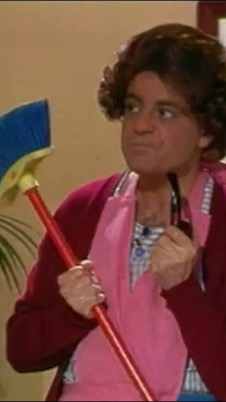 |
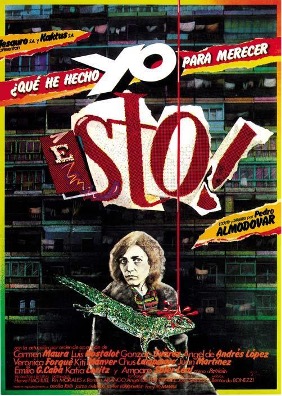 | The famous fim by Pedro Almodóvar (1984) Que es hecho yo para merecer esto? [What Have I Done to Deserve This?] is a dark comedy portraying the life and misadventures of an overworked housewife. |
The traditional humor of TV series like Aquí no hay quien viva [No One could live here] (2003-2006) is a Spanish TV comedy series about lives and interactions within a chaotic neibourghood community which satirizes the different personalities of the characters in general and of the houseviwes in particular. | 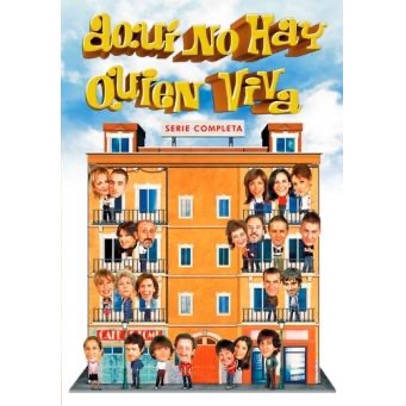 |
In music, highlights include traditional copla songs (a Spanish traditional music and poetic genre of four-line stanzas) and liberation anthems such as Ella by the singer Bebe.
A hymn to women’s freedom and empowerment after a period of chores and distress, in a passage it says:
| Hoy vas a ser la mujé que te dé la gana de ser Hoy te vas a querer como nadie te ha sabí'o queré Hoy vas a mirar pa'lante Que pá atrás ya te dolió bastante Una mujé valiente, una mujé sonriente | Today you’re going to be the woman you want to be Today you’re going to love yourself like no one has ever known how to love you Today you’re going to look ahead Because looking back has hurt you enough A brave woman, a smiling woman |
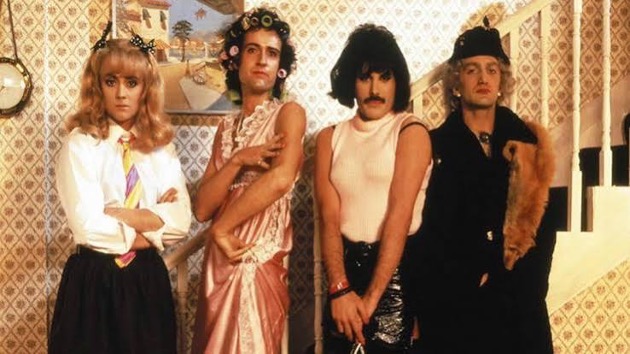
At an international level, the music video for I Want to Break Free by Queen (1984) stands as the ultimate Anglo-Saxon icon of this myth. Parodying British soap operas, the band used hair rollers, housecoats, and the famous image of Freddie Mercury with a vacuum cleaner to turn the frustration and boredom of the housewife into a universal cry for emancipation.
Problematization:
The systematic use of the concept of maruja/housewife in the media produces three high-impact psychosocial effects:
1. infantilization and intellectual restriction: the main effect is the direct association between housework and a low cultural background. By pigeonholing this group of people under the stereotype of the 'TV-dependent' or gossiping maruja, the media assumes they lack interest in topics like politics, culture, or science. This is used to justify broadcasting lower quality or purely sensationalist content during daytime hours;
2. perpetuation and normalization of the gender gap: by flooding screens with images where only women with this profile care about laundry, cleaning, or looking after dependents, the media normalizes the idea that the domestic sphere belongs exclusively to women. This creates a social mirror effect: since men are not shown taking on these tasks naturally, shared responsibility in households is held back;
3. economic devaluation of care work: media language tends to present these women's activities from a humorous perspective or as lower-category work. The effect of this bias is that it hides the real weight that unpaid domestic work has on the Gross Domestic Product (GDP) of every country. By turning the caretaker into a comic caricature, her work is stripped of any labor or political dignity.
Communication strategies:
The term 'maruja' works as a rhetorical tool for social devaluation. It uses strategies like degrading metaphors, condescending irony, hyperbole, and metonymy to destroy women's credibility and reduce their complexity to a simplistic cliché. As a performative act, this usage creates shame and self-limitation for women while reproducing power relations.
Subversion:
Feminist authors have provided some key reflections and references to challenge and subvert the the socio-culturally constructed representation of the housewife (please refer to the Annotated Reading List at the bottom of the page).
In Spanish feminism, journalism, and academia, several key figures have analyzed the pejorative, sexist, and classist weight of the term 'maruja'. Among them, is Maruja Torres, a feminist journalist and writer who vindicated the very name maruja for herself. As a post-war, working-class born journalist, she denounces how the term was used to strip dignity away from lower-class women whom the Francoist regime forced into domestic confinement. For Torres, the maruja of the 1970s and 1980s was never uneducated by choice, but rather the victim of a systemic denial of education.
Similarly, contemporary feminism in Spain has started a process of linguistic reclamation to transform the insult 'maruja' into a symbol of pride, resistance, and dignity through three main pillars:
- from a derogatory expression, the term 'marujeo' is now being conceived as a support network: neighbourly chat and sharing secrets is reclaimed not as empty gossip, but as a historical tool for survival, support, and detecting domestic violence against individualism;
- powerful marujas: spaces like the podcast Deforme Semanal Ideal Total [Total Ideal Weekly Distortion], a Spanish podcast of culture, politics, feminism, and humour, popularized this concept to blend high culture with the enjoyment of everyday life, removing guilt and honoring the lineage of mothers and grandmothers:

- unionism and political identity: domestic and care workers' movements are adopting the term in protests to demand labour rights. They are transforming the figure of the submissive woman into an organized worker claiming for her own rights. This communication strategy successfully challenges stigma and prejudices by stripping the insult of its power to hurt, while recognizing care work as the invisible but vital engine of all societies. In Spain, the phenomenon of reclaiming terminology and transforming the stereotype of the submissive woman into an organized and combative worker has extraordinary and pioneering examples in Europe. Domestic and care workers' collectives have resignified the historical stigma of the 'sirvienta' [servant] or 'chacha' [maid] — sister concepts to the traditional maruja — and turned them into a banner for political struggle.
The clearest and most iconic examples of this movement in Spain are:
Territorio Doméstico and the 'Catwalk of Precariousness' (Madrid). This collective, born in Madrid in 2006, is the ultimate example of the aesthetic and political transformation of the caregiver concept in Spain. Instead of traditional demonstrations, they use performative actions such as street theater, music, and humor to subvert stereotypes. They are famous for their 'Pasarelas de la Precariedad' [Catwalks of Precariousness], where they march through central Madrid dressed in their aprons, feather dusters, mops, and scrubbing gloves. By exhibiting these tools of trade with pride, combative music, and collective choreography, they resignify and dismantle the image of the submissive woman confined to private spaces. They turn the uniform of servitude into a symbol of union power and collective resistance. Their slogans, such as "Porqué sin nosotras no se mueve el mundo!" [Without us, the world doesn't move] have redefined working-class pride in Spain. | 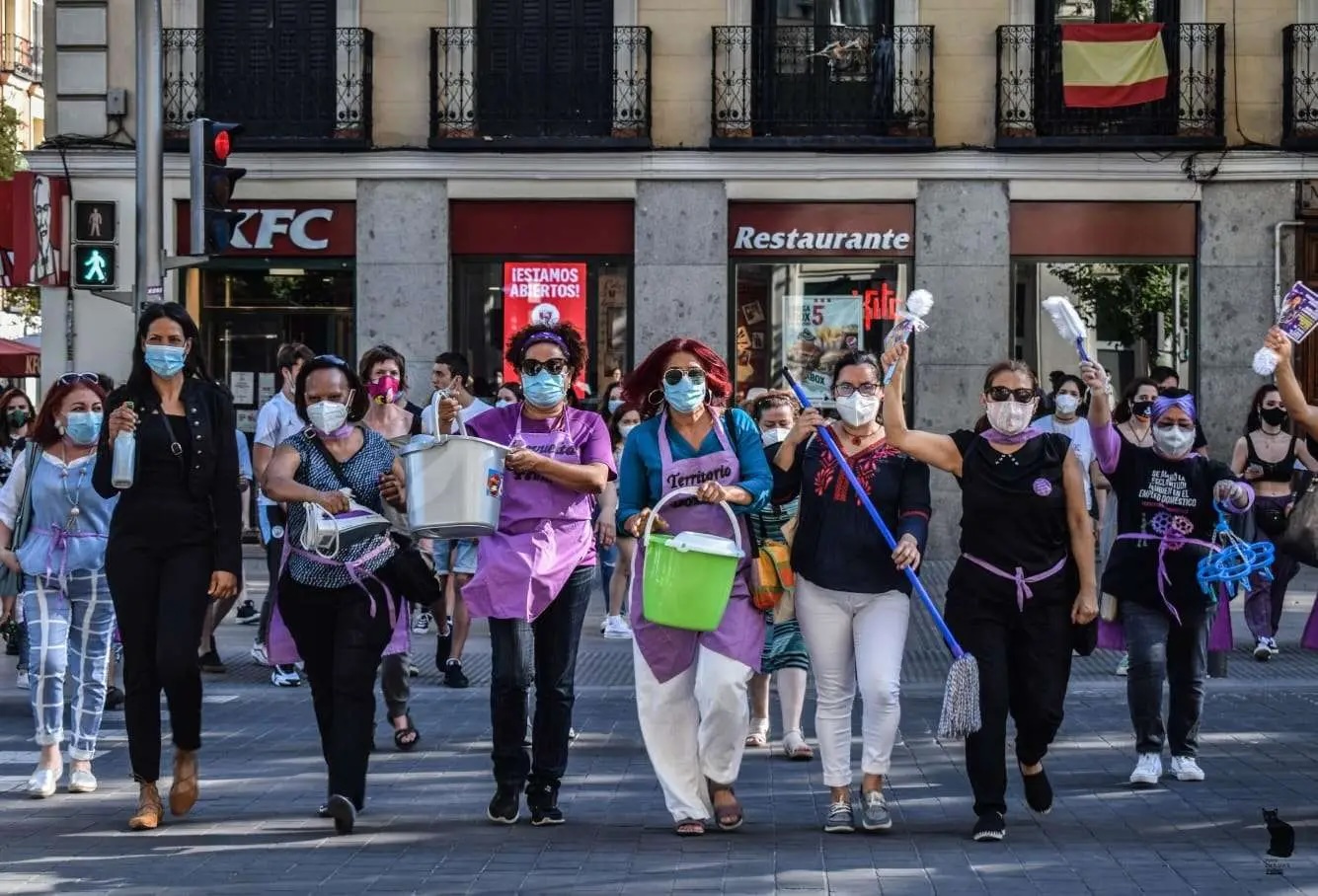 (Photo by Ela Rabasco) https://www.facebook.com/territoriodomestico/ |
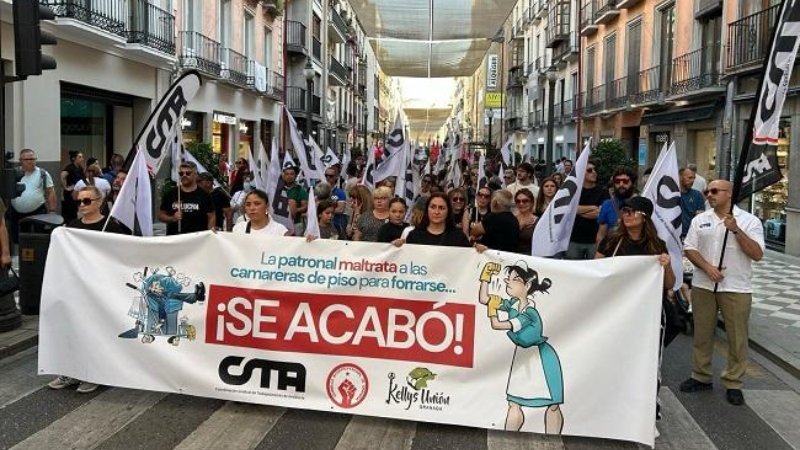 https://www.izquierdadiario.es/Las-Kellys | The phenomenon of Las Kellys (Hotel Housekeepers). Although they belong to the hospitality sector rather than private households, hotel housekeepers (those who clean hotel rooms) suffered for decades from the same classist stigma of being considered the invisible and precarious labor force of cleaning. For this autonomous union, their name, reclaimed with irony, has become a banner: Las Kellys comes from the popular Spanish expression “las que limpian” [the ones who clean]. Breaking away from the submission that major hotels expected of them, they organized independently through social networks in 2016. Then, moving from invisibility to Congress, they managed to bring their direct labor demands to the Spanish Congress of Deputies and the European Parliament, proving how a historically feminized and invisible collective can become the vanguard of the trade union struggle against outsourcing and chronic occupational health issues. |
Songs, Choirs, and the Soundtrack of Care.
The transformation of the submissive woman into a combative worker has consolidated in Spain through popular music at demonstrations. Collectives such as the Asociación de Trabajadoras de Hogar de Bizkaia (ATH-ELE) [Association of Domestic Workers of Bizkaia] or the National Care Network have modified the lyrics of traditional songs to use them in their protests. Example of musical combats are the hymns generated in protests or modified versions of traditional folk songs (coplas). In their lyrics, they explicitly sing about how they were expected to be "part of the family" (a paternalistic strategy used to avoid paying overtime) and how they now demand written contracts, labor inspections, and risk prevention, shattering the myth of domestic obedience.
SEDOAC and Media Activism. The association SEDOAC (Active Domestic Service), led mainly by migrant women, has carried out a fundamental linguistic and political battle within Spanish mass media and institutions. Assaulting the social narrative of their work as 'service', they have systematically rejected colonial or paternalistic terms like 'muchacha' [girl], 'chica del servicio' [service girl], or 'interna' [live-in] (when framed as household possession) on television sets and public debates. Through digital campaigns and protests outside the Ministry of Labour, they, as political subjects of rights, imposed the legal terminology of Trabajadoras del Hogar y de los Cuidados [Domestic and Care Workers]. This semantic shift in protests was the engine that forced the historic 2022 reform granting them unemployment rights, followed by the landmark occupational risk prevention laws enacted recently, finally solidifying the concept that a home is a workplace and they are organized workers. | 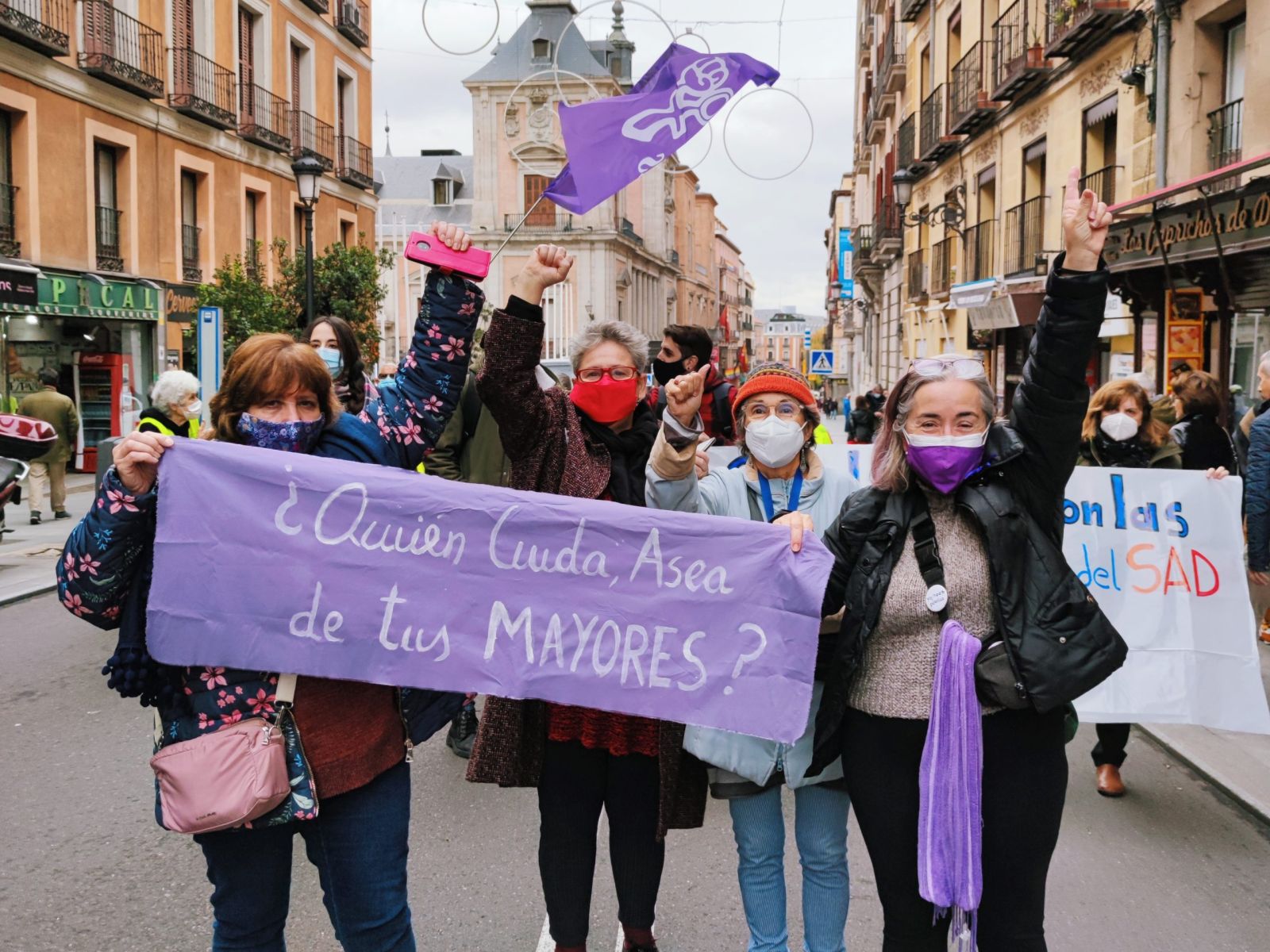 Madrid, November 2021 (Photo by Leah Pattem) https://madridnofrills.com/dignify-spains-domestic-workforce |
Discussion:
The discussion revolves along the axes of culture, gender, and power:
- social reflection: it questions the internalized classism of our language. Is rejecting the term actually a dislike for the working-class and rural world? Do we seek to look 'modern' by devaluing the home compared to success in the job market?
- recontextualization and resistance: it analyzes the limits of feminist reclamation. Can a word born out of oppression ever be completely cleaned up, or will it always carry its stigma? Is this transformation a real change or just a purely aesthetic and digital victory?
- interdisciplinary connections: it links economics, sociology, and psychology. Why does the economic system use its language to ridicule the very care system that keeps it alive? How does this media mockery affect the mental health of those who provide care?
- intercultural analysis: it looks at global bias in other languages. Why do all cultures create a degrading female archetype for the home, but not a male one? Is there a similar term in your own country?
References/Further Readings:
Annotated Reading List
In Spanish
- Jiménez Sureda, M. (2026). Brujas y marujas: Historia, mujer y estereotipos en sociedades reptilianes. Del techo de cristal al muro de hormigón [Witches and Housewives: History, Women and Stereotypes in Reptilian Societies. From the Glass Ceiling to the Concrete Wall]. UAB (Universidad Autònoma de Barcelona).
“Para someter a una mujer, hay que transformarla en una bruja o en una maruja” [To subjugate a woman, you have to turn her into a witch or a housewife]. This essay explores the links between history, misogyny, symbolic violence and contemporary culture, drawing parallels between the witches of the past and the discourses that still devalue women. https://www.uab.cat/web/sala-de-prensa/detalle-noticia/brujas-y-marujas-arma-de-sometimiento-segun-montserrat-jimenez-en-su-nuevo-libro-1345830290069.html?detid=1345995874448
- Montero, R. (2013). La ridícula idea de no volver a verte [The foolish idea of not seeing you again]. Seix Barral. The author reflects on the term maruja subverting its meaning from the traditional insult to the valorization of the women of previous generations who had developed strong strategies of resistance and survival inside the patriarchal society.
- Poblet, G. (2024). Criadas de la globalización: Servicio de hogar, género y migraciones contemporáneas. [Maids of Globalization: Domestic Work, Gender, and Contemporary Migration]. Barcelona: Icaria. The book investigates the reality of migrant women who go to Spain looking for a better future and better opportunities for themselves and their families but have no other choice than working as maids, housekeepers, nannies, or caregivers for the elderly in other people’s homes, working 24-hour shifts without rights or breaks.
- Viñuales Sarasa, O. (2011). Y no fueron marujas [And they weren’t housewives]. Bellaterra Edicions. In this volume of the ‘Relatos’ collection, nine women aged between 55 and 70 explain why they decided to break away from gender roles during Franco’s dictatorship. https://www.bellaterra.coop/es/libros/y-no-fueron-marujas
In English
- Adichie, C. N. (2017). Dear Ijeawele, or a Feminist Manifesto in Fifteen Suggestions. Written as a letter to a friend, the book offers advices on how to teach a young girl to become an independent woman, also by challenging the social expectations of relegating a woman to traditional domestic roles.
- Beauvoir, S. de. (1949). The second sex. Gallimard.
In the chapter on domesticity, the author sustains that domestic labour keeps women trapped into repetitive cycles that produce no legacy, preventing them to become autonomous individuals and agents of their existences.
- Butler, J. (1990). Gender Trouble. Feminism and the Subversion of Identity. Routledge. The author introduces the concept of gender performativity, arguing that gender is not a biological nature, but rather a series of repeated acts socially imposed.
- Costa, M. D., & James, S. (1972). The power of women and the subversion of the community. Falling Wall Press.
This foundational feminist text maintains that housewives are the invisible and unpaid working class, and that house labour is functional to capitalism since reproduces power relationships, preventing women to participate to social production.
- Criado Perez, C. (2019). Invisible women: Data bias in a world designed for men. Abrams Press.
The book exposes how big data collections reproduce gender inequalities and prejudices, effecting negative effects on women in fundamental matters such as e.g., health issues.
- Davis, A. Y. (1981). Women, race & class. Random House.
From a Black feminist, historical, and political perspective the author examines race, class, and gender inequalities and the women’s struggles to liberation.
- Davis, L. S. (2024). Housewife: Why women still do it all and w at to do instead. Legacy Lit.
The book examines the social history of the housewife archetype and reveals the lie of ‘the American way of life’ based on the gender divide ‘breadwinner vs homemaker’.
- Federici, S. (2012). Revolution at point zero: Housework, reproduction, and feminist struggle. PM Press.
The book displays forty years of research and theories on women's struggles regarding housework and social reproduction, also examining how to redefine it to challenge capitalist relations.
- Friedan, B. (1963). The feminine mystique. W. W. Norton.
The text highlights the women’s struggle against societal traditional roles which hinder them to pursue personal goals and stresses the importance of recognizing women's true voices.
- Illouz, E. (2007). Cold Intimacies: The Making of Emotional Capitalism. Polity Press. Emotional ties actively reproduce gender roles, reinforce gender divisions, and the split between public and private spheres, all essential factors of a powerful emotional culture that was essential to the rise of modern capitalism.
- hooks, b. (1984). Feminist theory: From margin to center. South End Press.
The author demonstrates how mainstream feminism's emphasis on white, professional women has hidden the vital role that women of colour and poor women have played in the liberation movement.
- Oakley, A. (1974). Housewife. Allen Lane.
Through four case histories, the author examines the history and modern reality of women's domestic roles, challenging traditional values that tie work exclusively to men.
- Woolf, V. (1929). A room of one's own. Hogarth Press.
A major classic of feminism and feminist literary theory, the book argues that women need financial independence and private physical space to be able to express their creativity.
AI Disclosure:
Artificial Intelligence (ChatGPT) was used for approximately 40% of this text to assist with translation, stylistic editing, and structural formatting specially in the parts of discussion, problematization and subversion based on the author's original data.
How to cite this entry:
Caballero Sánchez, M. (2026). Maruja. In Other Words. A Contextualized Dictionary to Problematize Otherness. Published: 19 October 2026. [https://www.iowdictionary.org/word/maruja, accessed: 23 October 2026]