
n-word
by Class 2A - Liceo Volta, Turin, Italy (G2)Abstract:
La 'N-word' è un termine di origine latina ('niger') che ha subito una significativa evoluzione storica. Un tempo era solo un modo per descrivere il colore della pelle, mentre oggi è un grave segno di pregiudizio e discriminazione legato alla schiavitù e alla segregazione dei neri. Oggi questa parola ha due significati. Nelle comunità di origine africana e nella musica rap, spesso simboleggia una forma di riappropriazione linguistica per esprimere fratellanza e identità. Tuttavia, il suo uso al di fuori di questi contesti è una espressione discriminatoria e razzista. In Italia, tra i giovani, l'uso di questo termine varia. Alcuni lo usano per seguire le tendenze hip-hop, mentre altri lo criticano come un'imitazione superficiale (se non una appropriazione culturale) priva della necessaria consapevolezza storica. Al di fuori del gruppo di appartenenza, l'uso di questo termine è sanzionato, e ciò riflette una tensione continua tra il suo uso come slang identitario e il suo potere di emarginare e offendere.
The ‘N-word’ is a term of Latin origin ('niger') that has gone through a significant historical evolution. Once, it was just a way of describing skin colour; now it’s a serious sign of prejudice and discrimination linked to slavery and the segregation of Black people. Nowadays, this word has two meanings. In communities of African origin and in rap music, it often symbolises a form of linguistic reappropriation to express fraternity and identity. However, its use outside these contexts is a discriminatory and racist expression. In Italy, among young people, the use of this term varies. Some use it to follow hip-hop trends, while others criticise it as a superficial imitation (if not a cultural appropriation) lacking the necessary historical awareness. Outside the in-group, the use of the term is sanctioned, thus reflecting an ongoing tension between its use as identity slang and its power to marginalise and offend.
Etymology:
The 'n-word' comes from from the Latin ‘niger’, meaning ‘black’. It later passed into the Romance languages: in Spanish it became ‘negro’, and in French ‘nègre’. Between the 16th and 17th centuries, it also entered the English language, initially only referring to Black people, without any offensive meaning.
In the United States, between the 17th and 19th centuries, in the context of African slavery and then racial segregation, the term began to be used in a derogatory manner. From the description of skin colour, it became an expression of prejudice and discrimination against people of African origin.
In the 20th century, a variant of the word emerged within some African-American communities – ‘nigga’. This form is often used in informal contexts among friends as a greeting or to express closeness. It represents a form of linguistic reappropriation. However, it can still be seen as offensive within Black communities.
Green’s Dictionary of Slang states that the n-word is used as a derogatory term regardless of race or skin colour
(https://greensdictofslang.com/search/basic?q=Nigger).
.png)
https://books.google.com/ngrams/graph?content=nigger
Cultural specificity:
While Italy lacks a historical legacy of the Transatlantic Slave Trade, it currently navigates complex integration hurdles as it transitions from a traditional land of emigration to a primary European gateway for diverse migratory flows, often struggling to reconcile systemic labor needs with social inclusion and legal frameworks.
We should not forget to acknowledge the historical markers and parallels traced by the Italian diaspora in America. During the late 19th and early 20th centuries, Italian immigrants in the US were frequently outside the boundaries of the white racial category, which was then defined by the WASP establishment.
Italian immigrants were poor and worked as laborers. Hence, they were commonly referred to by degrading terms like “white n****rs.” Moreover, it has also been documented at Ellis Island that Italian immigrants were not categorized as “White” but rather as “Southern Italian” and were considered racially inferior. After the Civil War in the US (1861-1865) and the abolition of slavery, Italian immigrants were employed in the cotton fields of the South to replace Black laborers (Gugliermo & Salerno, 2003).
In Italy, as to workplaces, corporate environments, public administration, and the media, the use of racial slurs results in immediate termination, significant reputational damage, and severe sanctions. Unlike the United States, where the use of the term by older generations can occasionally be attributed to historical inertia in specific subcultures, such usage is virtually non-existent among older Italians. In Italy, the term is viewed almost exclusively as a marker of aggressive hostility or extreme marginalization against migrants from everywhere except Europe rather than a relic of old-school vocabulary.
Legal Standing
Article Three of the Italian Constitution, written after World War II and the Fascist Regime (approved in 1947 and entried into force on Jan. 1st, 1948), states that all citizens have equal social dignity and are equal before the law, without distinction as to sex, race, language, religion, political opinion, or personal and social circumstances. By affirming such principles, the Italian Constitution makes a neat stance against all forms of discrimination and racism.
The Mancino Law (Law 205/1993) maintains a rigorous legal stance against hate speech:
● purpose: it is the primary legislative tool against racial, ethnic, national, or religious discrimination and violence.
● international context: for an international audience, it is important to note that the Mancino Law criminalizes the propagation of ideas based on racial or ethnic superiority
● prosecutory merit: the use of racial slurs is not just a social faux pas; it carries legal weight as an aggravating circumstance under Article 604-ter of the Penal Code. This means that if a crime (such as defamation or assault) is committed with "racial hatred" as a motive—evidenced by the use of slurs—the prison sentence is increased by up to one-half.
Usage of the n-word among young people
There is a linguistic shift happening among young Italians, especially those who are deeply into North American hip-hop and trap culture:
● reclamation vs. imitation: young people use the English 'n-word' as a colloquial term for 'friend' or 'peer', stating that they are reclaiming the word to take away from its derogatory meaning
● the critique: such a practice is viewed negatively by sociologists and the Afro-Italian communities. They claim that since Italy does not have the same domestic history of segregation as the United States, non-Black Italians using this word cannot reclaim a struggle that they never went through. Instead, they are 'cosplaying' another culture, ignoring that the violent history of this word cannot be washed away by changing one's accent or genre of music (Mazzetti, 2017; Barro, 2020; Bianchessi, 2020; Forte, 2020; Attolino, 2022).
To understand better these points we decided to interview two friends of us.
First interview.
K.N. is a 15 year-old Black boy of Ghanaian origins who lives near Turin, Italy. He plays basketball and tells what he thinks about the n-word.
Interviewer: Hi K, thanks for agreeing to be interviewed, even though I imagine the topic isn't comfortable. First of all, what do you think of the work we're doing?
K.N.: Hi, don't worry about the topic, I'm just happy to hear it. I've read what you've written so far and really enjoyed it. I didn't find it discriminatory at all, and it allowed me to discover new things about the n-word.
Interviewer: I'm very happy to hear that. Moving on to a more personal topic, how do you feel when you're called a ni***r? Obviously, you can decide not to respond or to respond partially.
K.N.: Well, I consider myself more tolerant than some of my friends in this regard, but maybe I shouldn't. In any case, when another Black person calls me with the n-word, it doesn't make me angry, but if a white person who isn't even my friend calls me n****r, I might get angry. Fortunately, I've never gotten into a fight over being called the n-word, but I really don't understand why some people do it, as if it's just what sets me apart from them or defines me as a person.
Interviewer: Thank you so much K. for your help and the beautiful testimony, see you next time!
K.N.: Thank you! It’s been a pleasure.
Second interview
J. O. is a 19 year-old Black student of NIgerian origins who lives in Turin. He tells his opinion about the n-word.
Interviewer: Hello J., it's a pleasure to ask you these questions, thank you for your full cooperation notwithstanding the unsettling topic. First, tell us more about your opinion about the word n****r.
J. O.: Thank you for these questions. First of all I think that this word is used in different ways with different exceptions and some people might mask their intentions with these said exceptions. In fact, the word itself comes from the word 'nigg', worker. This word was used for workers who worked in cotton fields, people who were treated badly even if they worked a lot. Then the word evolved and it became 'n****r' as we know it today. It really depends on the use.
Interviewer: Now let's move on to the next question. Does it bother you if someone close to you calls you by the n-word?
J. O. No, it doesn't bother me. I hear it from both friends and unknown people. If it's the latter case it shows that it's a problem, while my friends say it a lot because they know it doesn't bother me. If someone I don't know comes up to me and calls me with the n-word I would look at them badly and walk away but rather than being angry with the word itself I'd worry about the people who use it.
Interviewer: I agree with you, that's true. Do you have a particular memory about someone using this word against you that struck you?
J. O.: In middle school, there was a group of boys who found enjoyment in bullying others, me included. They would come up to me and talk trash, usually including the n-word and it would happen often when teachers weren't around.
Interviewer: How was the first time hearing someone calling you with the n-word?
J.O.: It felt very personal, like it really resonated inside me. As I said before, I really felt sorry for them because insulting someone because of their ethnicity was a complete waste of time, they weren't even better than me in school so it was pointless. I think that it's most important to worry about the people who use it because it doesn't make sense to use such words in a discriminatory way.
Interviewer: That's all with the question, thanks for turning in even if the topic was personal.
J.O.: No problem, it was good sharing my personal thought and ideas with you.
The usage of the n-word within the context of Italian Rap and Trap Music
The use of the n-word within the Italian musical context is a complex and heavily discussed issue that differs greatly from the American experience due to the specific historical experience with colonialism and current migration. In the Italian context, this issue is discussed with reference to 'Second Generation' (G2) Italians, i.e., Italians who are the children of immigrants and have been raised or born in Italy and are using music to define themselves.
The context of usage within Italian Rap
1. Reclamation by Afro-Italian Artists
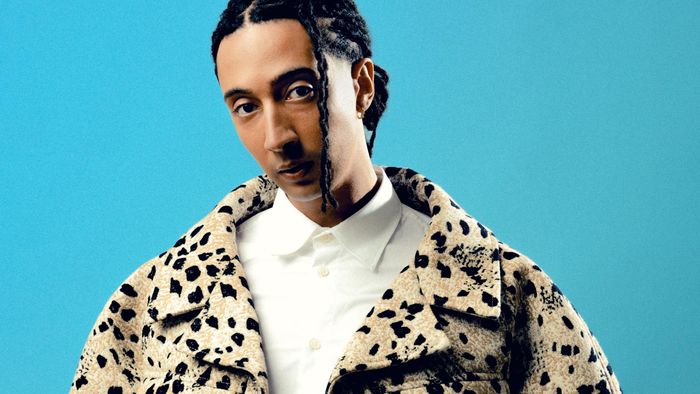
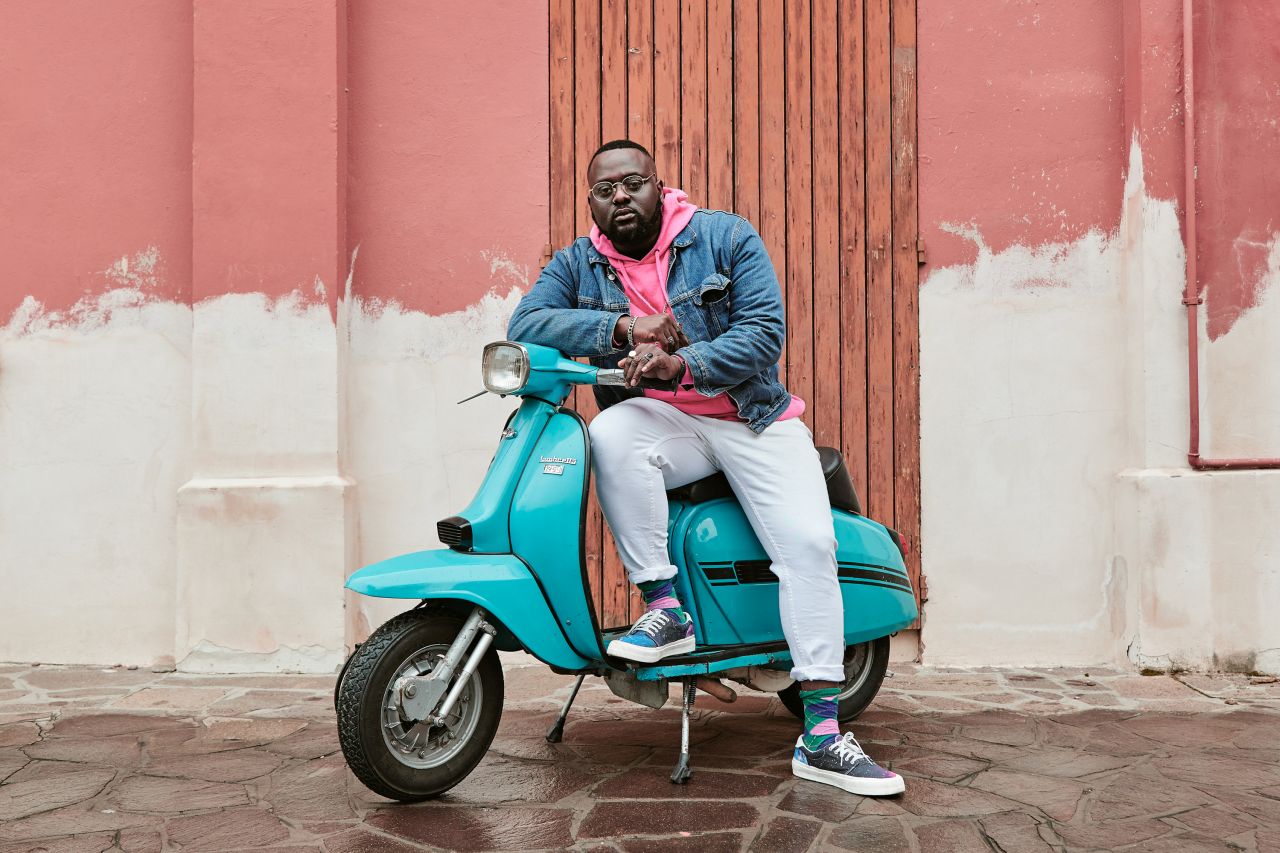
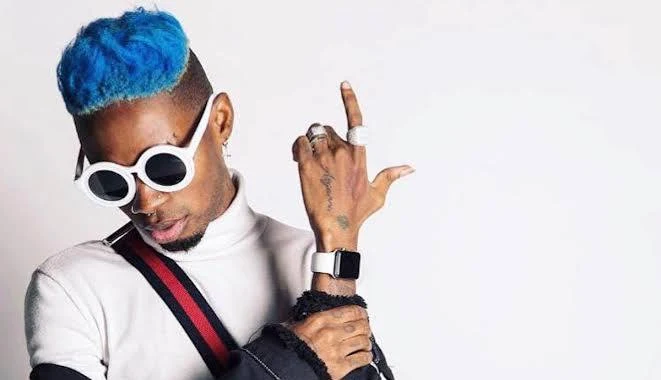
For Black Italian artists such as Ghali, Tommy Kuti, or Bello Figo, the context and purpose of using the n-word within their rap music tracks is similar to the American experience:
- the goal: the artists are attempting to reclaim a word that was used to degrade and subdue Afro-Italian people by Italian colonialists and xenophobes
- the nuance: the Italian word for the n-word, 'negro', directly translates to "Black" and "Latin" and is widely used within the context of rap and dance music to create a sense of belonging and create a rhythmic effect. By using this word within the context of rap music, the artists are attempting to state their presence within a country that does not consider them 'fully Italian'.
2. The 'Americanization' of Italian Trap
In recent years, several non-Black Italian rappers started using the n-word within their songs (Mazzetti, 2017; Barro, 2020; Bianchessi, 2020; Forte, 2020; Attolino, 2022).
- the motivation: the word is not viewed by many of the younger artists as a racist term, but rather as a term denoting a style or genre. In fact, the word is used as a synonym for 'brother', 'peer', as being heavily influenced by American rap
- the controversy: this has led to a huge controversy in the Afro-Italian communities and activists, who claim that non-Black Italian rappers who use the word are not respecting the historical context of racism, discrimination, and violence against African people. Therefore, there is a growing understanding that only the group who was originally targeted by this word can reclaim it, and hence, there is a shift away from non-Black Italian rappers who are moving toward more inclusive language within the genre.
3. The use of the word 'n***o' | 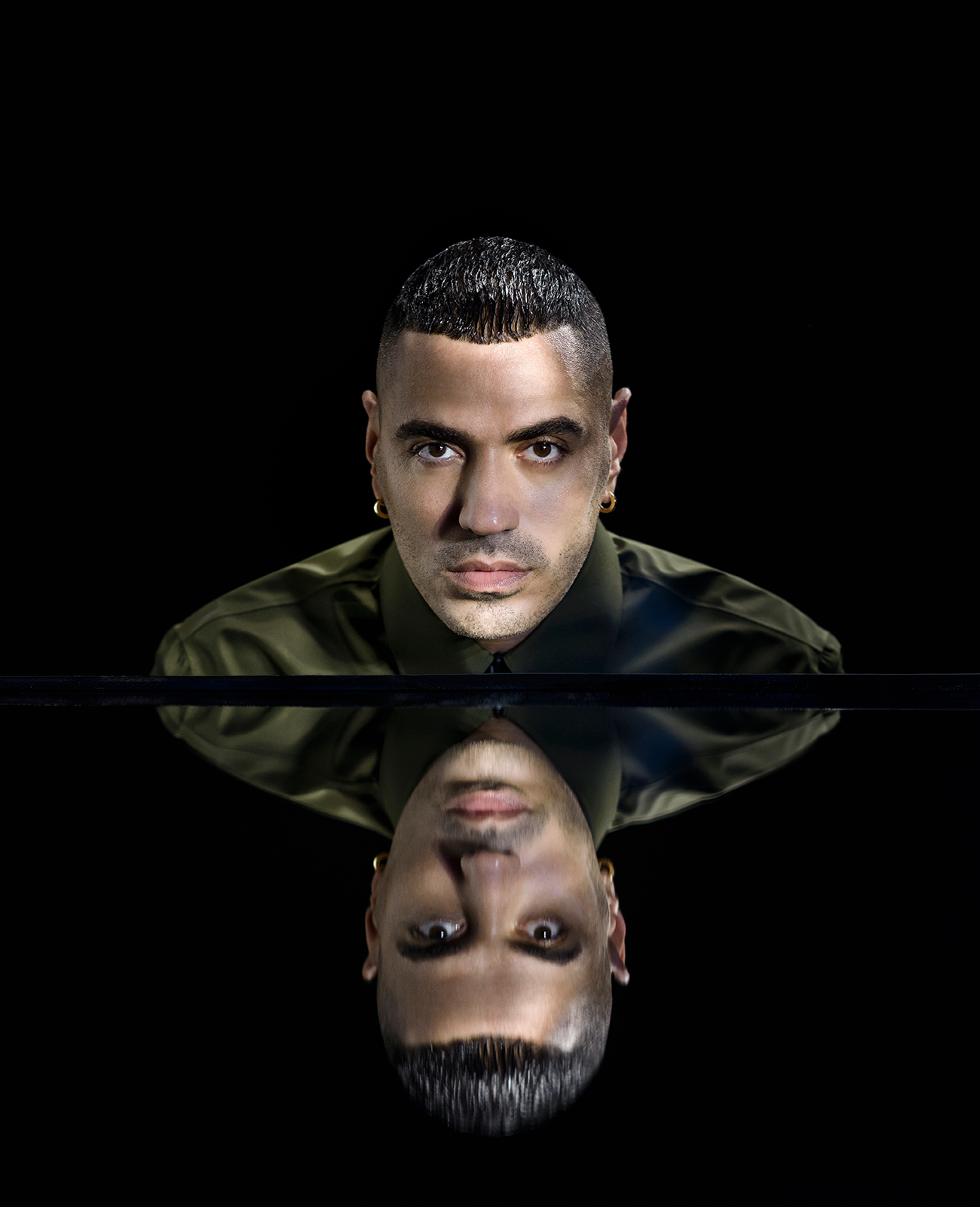 https://www.rollingstone.it/digital-cover/marracash-e-differente/483512/ |
TV programme
.jpg) | Boondocks is a satirical animated series that began airing in 2005 in the US. It is based upon a comic series that also actually created a tremendous amount of controversy. An animated series following two African American brothers, Huey and Riley Freeman, who transfer to the relatively quieter neighborhood of Woodcrest to stay with their grandfather. In Italy, it began broadcasting in November of the year 2006 on MTV Italia. Due to the subject matter and complex cultural references involved in its storyline, it was initially only shown at late-night viewing hours and then moved to other channels like Sony Entertainment Television on Sky. While Uncle Ruckus symbolizes internalized racism, the show ironically targets the absurdity of white supremacy (https://en.wikipedia.org/wiki/The_Boondocks_(TV_series). |
Problematization:
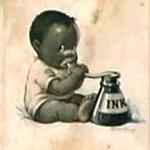
The 'n-word case' is a really interesting one because it shows that words are not just words, they have a lot of history and power behind them. The word has been used in different ways by different people in different situations. For example, in the first decades of the 20th century, those in power used this word in newspapers, media, caricatures, cartoons, advertising and movies to stereotype, dehumanize and discriminate Black people (Baptiste, 2023), while police and other institutions used it to oppress them.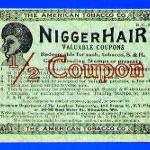
https://jimcrowmuseum.ferris.edu/caricature/more/nigger-and-caricature-gallery-01.htm#d19e256-48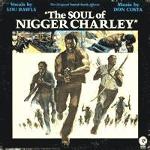
To know more about how representation shapes discrimination and violence, please visit virually - and, possibly, in-person - the Jim Crow Museum (https://jimcrowmuseum.ferris.edu/index.htm), a free and open space that uses objects of intolerance to teach tolerance and which also features many anti-Black and racist imageries throughout the decades, including images of new racist forms of the 21st century and white suprematist items.
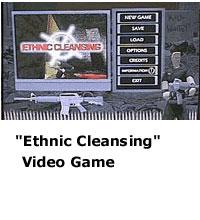
The museum also provides the historical timeline about the Jim Crow character, who was not a real person, but a fictional, racist figure created in 1828 by the white actor Thomas D. Rice who became famous by performing in blackface makeup as 'Jim Crow,' an exaggerated, highly stereotypical Black character. (https://jimcrowmuseum.ferris.edu/timeline/jimcrow.htm).
Black artists and communities are trying to take back the n-word and use it as a way to show who they are and how to stand together. This is still a controversial issue, and the question remains: who uses this word? to whom? in what context/situation? why?
When used by an external party to the Black community, this term is universally regarded as aggressive, racist, and discriminating given its long history of power and oppression.
In the US, there exists a large divide within the Black community itself. In fact, the older generations who grew up during the Civil Rights Movement believe that the word itself is unfixable and evoke racism and trauma (Wiggins, 2011; Southern Freedom Movement, 2015).
It all gets more complicated when we look at how this word is used in different countries. In Italy, France or Latin America people use this word in rap music. In such contexts, it does not mean the same thing as it did before, when it was deliberately used by those in power to degrade and dehumanize Black people. For instance, in Italy if an Afro-Italian artist uses the n-word to speak about how they have been treated, it is different from white kids using it just because they heard it in a song.
The problem is that the n-word moves from one place and one context to another, denoting different intentions and acquiring different meanings. Yet, its history stays the same. If we forget what this word really means we forget the harm it has caused throughtout the ages.
Subversion:
1. The Aesthetic Subversion (Europe & Asia)
For places without a history of Jim Crow (see above) there emerges a different use and definition of this term, largely as a means of aesthetic expression.
- the trend: for many youth in Europe, East Asia, and the Maghreb, this term has become a means to affiliate with street culture and 'coolness'.
2. Regional Counterparts and Overlaps
Global subversion is not exclusive to the English word, and there are regional counterparts that, like the English word, have gone through similar transformations:
- Latin America: words like 'negro' or 'negrito' can be affectionate nicknames for friends, even among whites. However, there is a chance for cultural conflict, particularly with the global ban on the n-word.
South Africa: similar to the US, the history of apartheid is reflected in language use in South Africa. Rappers can use the n-word, but also the k-word.In South Africa, the 'k-word' refers to kaffir, an extremely offensive and derogatory racial slur used to dehumanize Black South Africans.) The word is so prohibited that the use can be legally sued.
3. The Digital Subversion (Internet Culture)
On the internet, the word is often subverted in the form of memes.
- the mechanism: the word is often used in absurd or unconventional situations to 'prove' digital intimacy or closeness also among white people as a peer-jargon
- the risk: yet, the anonimity of the Internet makes it ambiguous about who is actually using the word, with the risk of making its use acceptable.
4. The Reclamation Move (Global Hip-Hop and Rap)
As seen above, all throughout times and countries, people have taken a word that was traditionally used to control and oppress and flipped it to become a term of identity and belonging.
- the logic: the group that was traditionally referred to with this term are claiming it as their own
- the result: as a result, there emerges a chasm in global terms, depending on wheter it is used by the in-group or the out-group. Within the Black community this term means warmth and camaraderie, but when used by outsiders it is a strong signal of discrimination
- the younger generation’s use: it is important to understand how the n-word is used in rap and hip-hop. The term is used in all forms of these musical genres, and it can be considered a way of reclaiming Black identity and ethnicity.
The term is also used to strip off its original slur and use it as a casual term for 'friend', 'peer', or 'person'. As hip-hop is a part of pop culture, it is considered a significant part of modern artistic expression, although it is controversial due to its relation to racism (Julius, 2015; Wilson, 2020).
The Evolution of Usage
● The 1970s: in the early stages of hip-hop (block parties and park jams), the n-word was used as a colloquial term or street slang. The term appeared in live performances and in early music as a way to refer to a friend or a partygoer. It is a reflection of the way people spoke in the Bronx and other cities
● The 1980s: rap music became a recorded art form in the 1980s. In this period, Public Enemy and N.W.A. used the term to refer to the harsh realities of the street of Black America
● The 1990s: In the 1990s, the n-word became a common term in hip-hop music. The term appeared in the music of rappers such as The Notorious B.I.G. and Tupac Shakur to refer to brotherhood or 'being authentic'. In this period, the debate on reclamation became a national debate as the music reached a huge audience across the globe.
For the evolution of usage, please refer to:
- Use of Nigger in the Arts: https://en.wikipedia.org/wiki/Use_of_nigger_in_the_arts
- The Journal of African American History: https://www.jstor.org/journal/jafriamerhist
- The National Museum of African American History and Culture: https://nmaahc.si.edu/learn/talking-about-race
Example of nowadays songs for each main language
Lacrim - T’es pas prêt: "Que ton c** serait à découvert et qu’il était pas prêt/À encaisser ma grosse b*** de nègre" (https://genius.com/Lacrim-tes-pas-pret-lyrics) | .png) |
 Kanye West, Jamie Foxx - Gold Digger: "(She give me money) Now, I ain't sayin' she a gold digger/(When I'm in need) But she ain't messin' with no broke niggas" (https://genius.com/Kanye-west-gold-digger-lyrics) |
Artie 5ive - Ready Rock (2/3): "Oh, fra' (Oh), questo negro parla un sacco (Yeah) (Ah-ah)/Bet tra due anni lo ritrovano in un sacco (Ah) (Oh fra')" | .png) |
 Anuel AA - Intocable: "El sacamostro', ¿oí'te, cabrón?/Mera, dime Negro, ¡brrr!/27, J-80, ¿oí'te, cabrón?" (https://genius.com/Anuel-aa-intocable-version-oficial-lyrics) |
● Linguistic reclamation and normalization: in the context of the Kanye West and Artie 5ive examples, the term appears to be a colloquialism for 'man', 'peer', or 'guy'. This aligns with the in-group definition, in which the term has been reclaimed and normalized as a noun in the context of hip-hop culture, regardless of the country of origin.
● Shock and provocation: the Lacrim lyrics use the term in an aggressive, hyper-masculine, and provocative manner. Here, the term is paired with graphic content and intended to convey a sense of power and intimidation.
● Cultural exportation: the appearance of the Italian artist Artie 5ive and the French-Algerian artist Lacrim indicates that African American Vernacular English (AAVE) has been exported and incorporated into international contexts.
● Nicknames: in the Anuel AA example, 'negro' appears to be a direct address or a nickname. In Spanish-speaking cultures in the Caribbean, 'negro' can vary from a reference to a person's physical appearance to a term of affection, though its use remains a thorny issue.
Discussion:
- What was the most surprising fact you learned today?
- How can we apply these perceptions in everyday life?
- Have you ever witnessed someone use this word? How did it make you feel?
- Is banning the word enough, or do we need to change how people think?
References/Further Readings:
- Attolino, P. (2022). Non ‘stranieri’, ma ‘straneri’: hip hop, G2 e sensibilità diasporica in Italia [Not foreigners, but 'extrablack': hip hop, G2, and diaspora sensitivity in Italy]. https://atem-journal.com/ATeM/article/download/2022_2.06/3283/9262 2022 I innsbruck university press, Innsbruck. ATeM I ISSN 2707-4102 I www.atem-journal.com
Nr. 7,2, 2022 I DOI 10.15203/ATeM_2022_2.06. - Baptiste, B. (2023). The Times-Picayune’s Historical Use of the N-Word. Black Perspectives. 08/ 09/2023. https://www.aaihs.org/the-times-picayunes-historical-use-of-the-n-word/
- Barro, M. (2020). Il rap e la trap italiani hanno un problema con la N-word [Italian rap and trap have a problem with the N-word]. Rolling Stone. 06/06/2020. https://www.rollingstone.it/musica/il-rap-e-la-trap-italiani-hanno-un-problema-con-la-n-word/520201/
- Bianchessi, M. (2020). Quel passaggio che spesso manca per comprendere la black culture [The missing step to undertand the Black culture]. Soundwall. 03/06/2020. https://www.soundwall.it/quel-passaggio-che-spesso-manca-per-comprendere-la-black-culture/
- Costituzione Italiana [Italian Constitution]: https://www.senato.it/istituzione/la-costituzione
- Forte, G. (2020). 'Ma con la B posso dirla?' Social media e percorsi di negoziazione della N-word tra appropriazione culturale e policy della piattaforma ['But can I say it with B?' Social media and negotiation paths between cultural appropriation and platform policy]. pp. 176-184. Echo. Rivista interdisciplinare di comunicazione. https://ojs.cimedoc.uniba.it/index.php/eco/article/download/1221/1034/3535.
- Guglielmo, J., & Salerno, S. (2003). Are Italians White? How Race is Made in America. Routledge.
- https://www.britannica.com/dictionary/Nigger
- https://www.treccani.it/vocabolario/neo-n-word_(Neologismi)
- https://www.etymonline.com/word/nigger
- https://greensdictofslang.com/search/basic?q=Nigger
- Legge Mancino [Mancino Law]: https://www.normattiva.it/uri-res/N2Ls?urn:nir:stato:legge:1993;205.
- Mazzetti, M. (2017). "Italiani come voi, siamo i rapper della seconda generazione e non vogliamo più sentirci stranieri in patria“ ["We are Italians as you are, we are the second generation rappers and we don't want to feel strangers in our own land"]. Il Fatto Quotidiano. 20/10/2017. https://www.ilfattoquotidiano.it/2017/10/20/italiani-come-voi-siamo-i-rapper-della-seconda-generazione-e-non-vogliamo-piu-sentirci-stranieri-in-patria/3925572/
- Southern Freedom Movement (2015). The "N-word". A discussion. March, 2015. https://www.crmvet.org/disc/15n-word.htm
- Wiggins, K. (2011). "African Americans' Perceptions of the "N-word" in the Context of Racial Identity Attitudes". Electronic Theses and Dissertations. 2298. https://scholars.indianastate.edu/etds/2298
How to cite this entry:
Class 2A - Liceo Volta, Turin, Italy (G2). (2026). N-word. In Other Words. A Contextualized Dictionary to Problematize Otherness. Published: 15 May 2026. [https://www.iowdictionary.org/word/n-word, accessed: 23 October 2026]